Precision Over Volume; A Different Way to Think About Retargeting
Tailkey turns behavioral data into sharper retargeting segments, synced automatically to Google Analytics, so you stop paying to reach people who'll never convert.

Segmentation
Here's a pattern I bet you'll recognize.
You launch a retargeting campaign. Someone visits your site, doesn't matter if they read every page or bounced in four seconds, and now they're in the pool. You show them ads for the next 30 days. Some convert. Most don't. And you tell yourself that's just how retargeting works.
It isn't. It's how lazy retargeting works.
We built Tailkey because we kept running into the same problem: ad platforms treat every visitor like they're the same person, when the data right in front of us said otherwise. So we started asking a different question, not did they visit, but what did they actually do while they were here. That question changed everything about how we think about ad spend.
The model isn't guessing. It's reading the journey.
Most attribution tools give you a single number: first click, last click, maybe a lazy 50/50 split if they're feeling generous. That's not attribution. That's a coin flip with extra steps.
Tailkey's model does something more useful. It looks at the entire path someone takes through your site: every page, every piece of content, the order they hit it in, and how that sequence lines up with people who actually convert. This is the engine behind things like Top Converting Paths and Exit Reports inside the product. It's not just telling you someone converted. It's telling you which journeys reliably produce conversions, and exactly where your best-fit users tend to give up.
Once you know that, ad spend stops being a guessing game.
Not everyone deserves the same ad.
Here's the part most teams get wrong: they build one retargeting audience, "people who visited," and call it a day.
But think about it. Someone who read your pricing page and dug into an integration doc is not the same person as someone who landed on your homepage and closed the tab twelve seconds later. Retargeting them identically is just wasteful. You're paying to reach both of them the same amount, even though only one of them looks like your best customer.
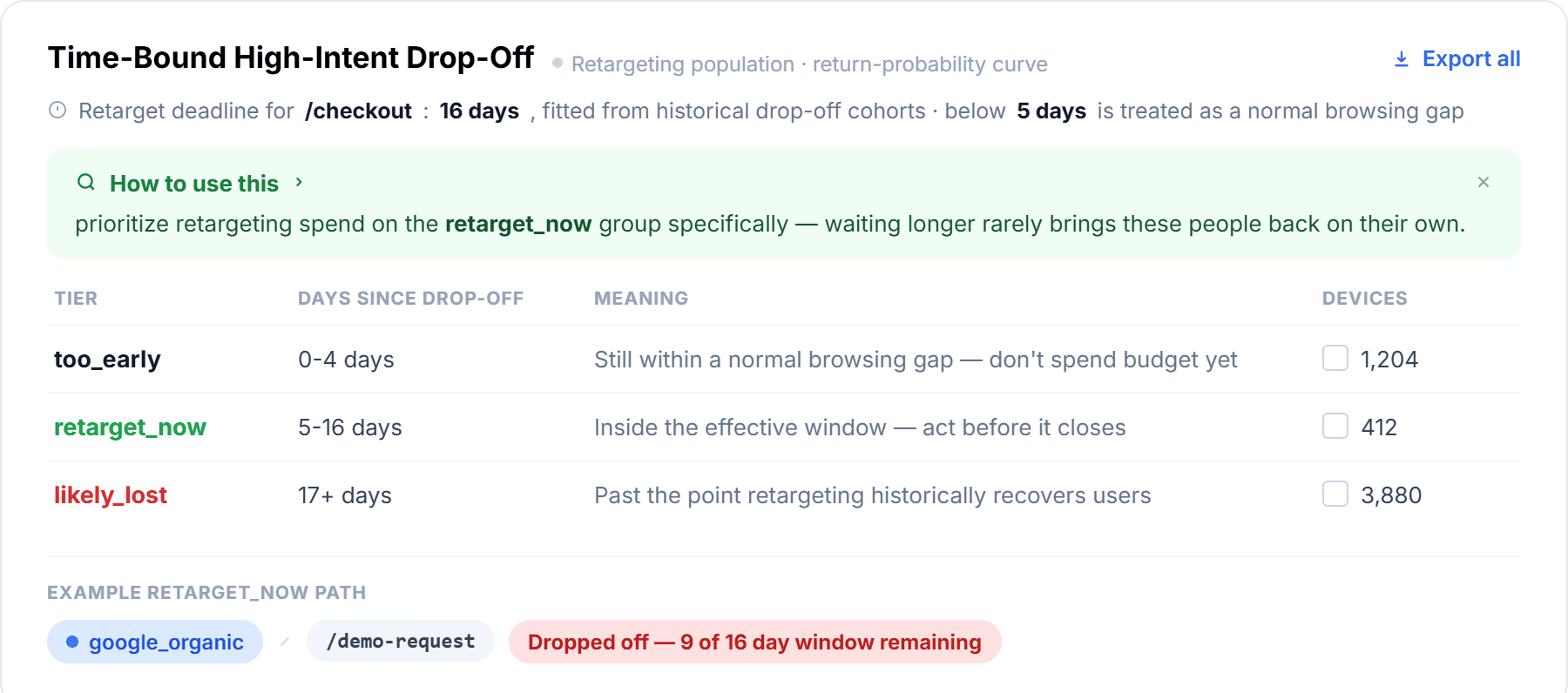
This is why we built Segment Builder around actual behavior: pages viewed, content engaged with, entry points, how far someone got before they dropped off a converting path. Smaller, sharper audiences. Precision over volume. It's baked into everything we do, right down to why we named the company what we did (long story, but it's about long-tail keywords, ask us sometime).
Google rewards relevance. Most retargeting throws it away.
There's a financial reason this matters beyond just "better targeting feels right." Google's ad systems are built to reward relevance. For Search specifically, Quality Score and Ad Rank are Google's own explanation of how expected clickthrough rate, ad relevance, and landing page experience factor into what you pay and how your ads get delivered.
Display and retargeting campaigns don't have an identical published score, but the same underlying logic runs through Smart Bidding: Google's automated bidding strategies, including Target CPA and Target ROAS, lean on engagement and conversion signals, as Google itself describes, to decide how efficiently to deliver your ads.
A broad "everyone who visited" audience drags those signals down. You're showing ads to plenty of people who will never engage, and Google's systems notice. Engagement rates drop, efficiency drops with them, and you end up paying more to reach fewer people who care.
Narrow, behavior-based segments do the opposite. When you're only showing ads to people who already demonstrated real intent, engagement rates go up. Google's algorithms pick up on that, and bidding strategies like Target CPA and Target ROAS start working with better signal instead of noise. The upshot: better segments don't just convert better on their own, they can make your entire account cheaper to run.
And then, the part nobody wants to do manually, it just syncs.
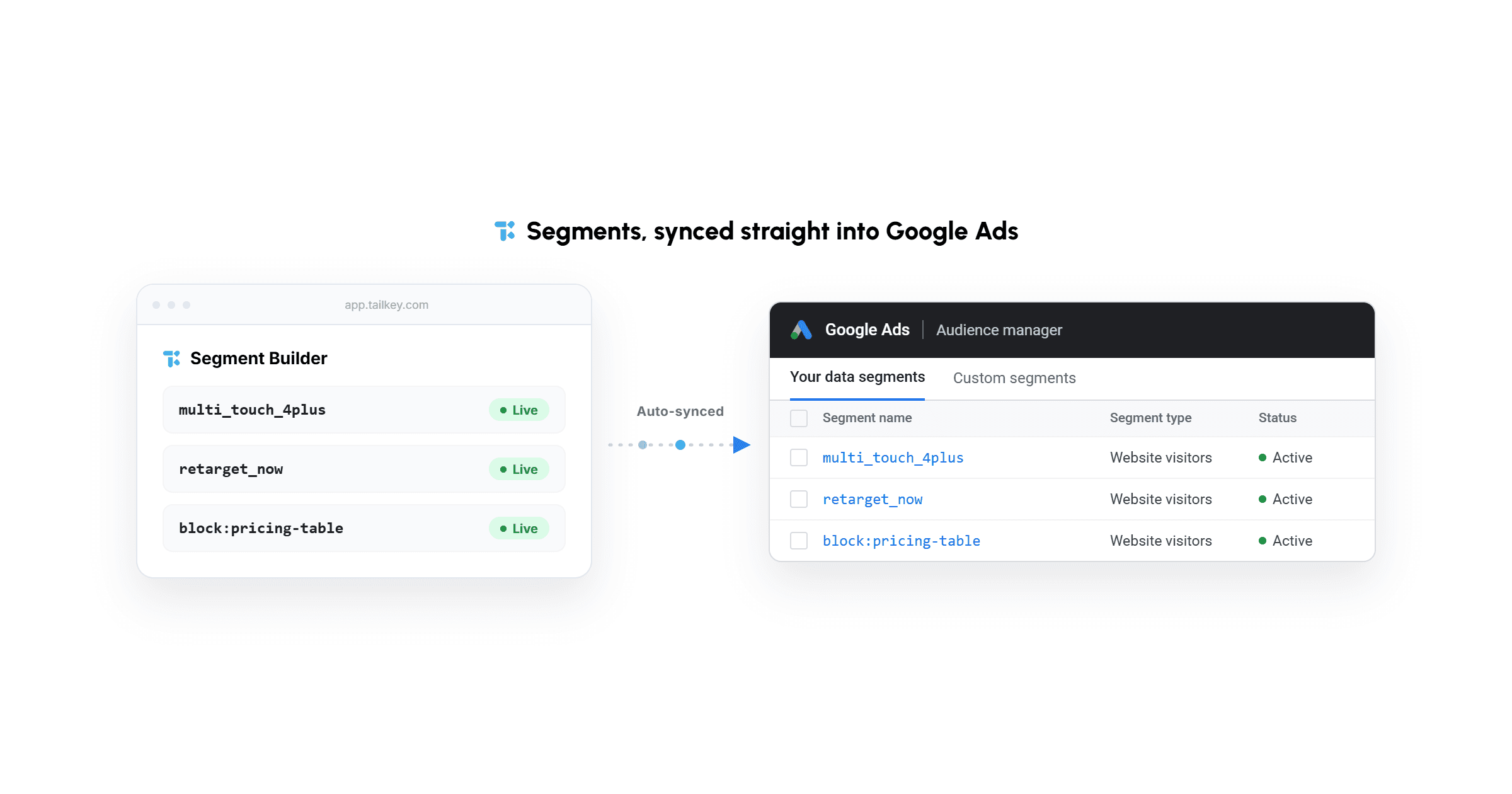
Here's where it gets good.
You can build the smartest segments in the world, but if getting them into your ad platform means exporting a CSV, formatting it, and uploading it by hand every week, you're not going to keep it up. Neither would we.
So Tailkey pushes those segments straight into Google Analytics automatically, through the Google API. No exports. No manual busywork. No stale audience sitting there from three weeks ago while your actual user behavior has moved on. As people move through your site and segments shift, the sync keeps up, so the audience your ads are targeting is always built from this week's behavior, not last month's snapshot.
What that actually buys you
Less money spent chasing people who were never going to buy. More money spent reaching people who behave like your best customers already do. Better engagement signal feeding back into Google's own systems, so the ads you do run get cheaper to deliver over time.
It sounds simple when you say it like that. It took us longer than it should have to actually build it.